September 12, 2024
Year
2023
Client
AFEX Commodities Exchange
Category
Agritech / Commodity Exchange
Product Duration
3 - 4 Months
Challenges
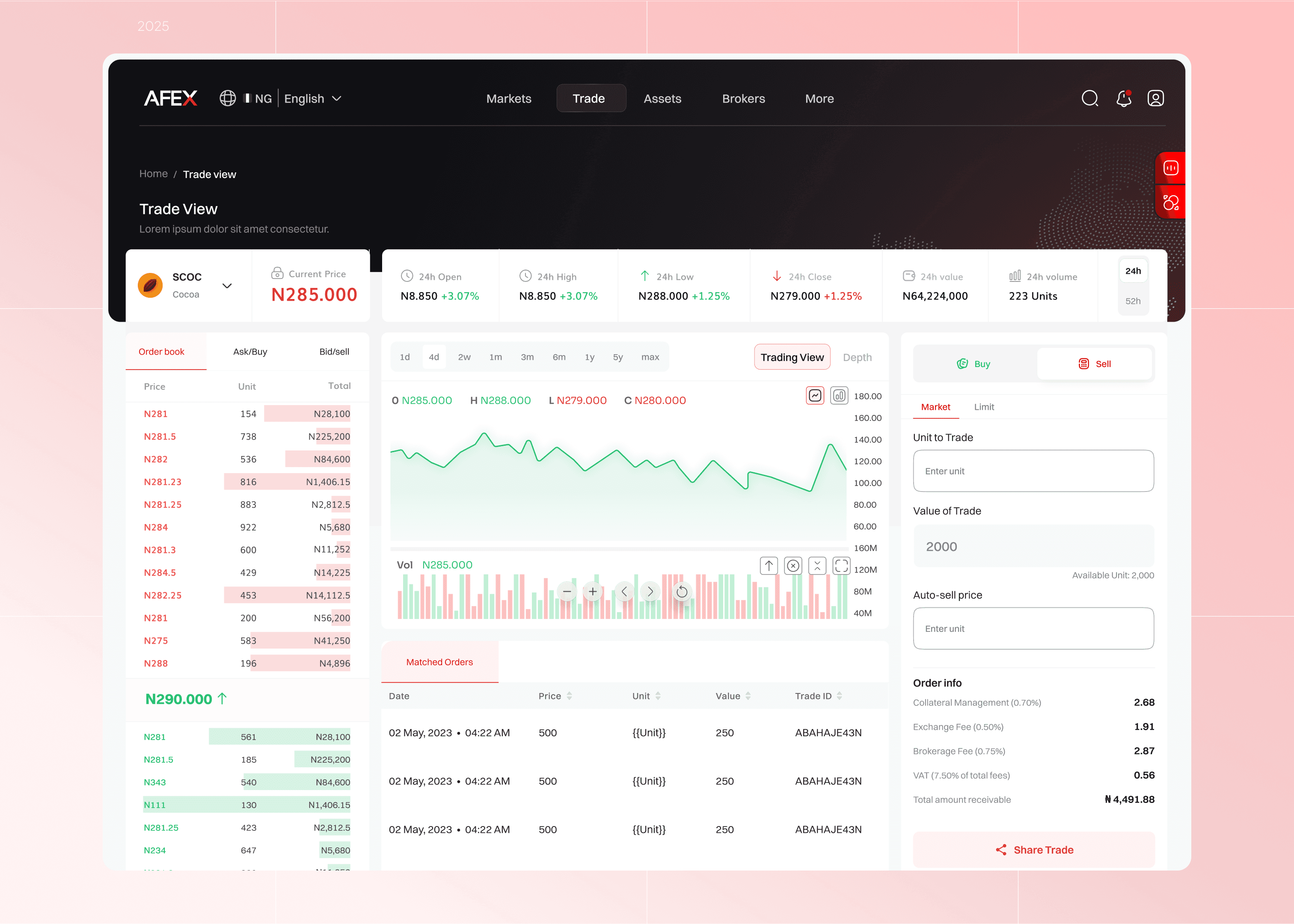
Before the launch of the Africa Exchange platform, agricultural markets across Africa were fragmented, with farmers facing limited market access, poor price transparency, and a lack of trust in transactions. AFEX aimed to solve this by creating a centralized digital platform that streamlined commodity trading, improved data visibility, and connected stakeholders across the agricultural value chain.
Research
To guide the design of the Africa Exchange platform, comprehensive research was conducted across multiple African markets to understand the challenges faced by farmers, traders, and other stakeholders in the agricultural value chain.
Field Visits: On-ground research in Nigeria and Kenya revealed that over 70% of farmers relied on informal trading with no price transparency or digital records.
User Interviews: Insights from 50+ interviews showed deep mistrust in middlemen and delays in payments as key pain points.
Digital Access Survey: A survey of 300+ farmers found that 60% used basic feature phones, with low awareness of digital price-checking tools.
Market Analysis: Competitor review exposed gaps in real-time pricing, logistics coordination, and scalable onboarding for rural users.
Design
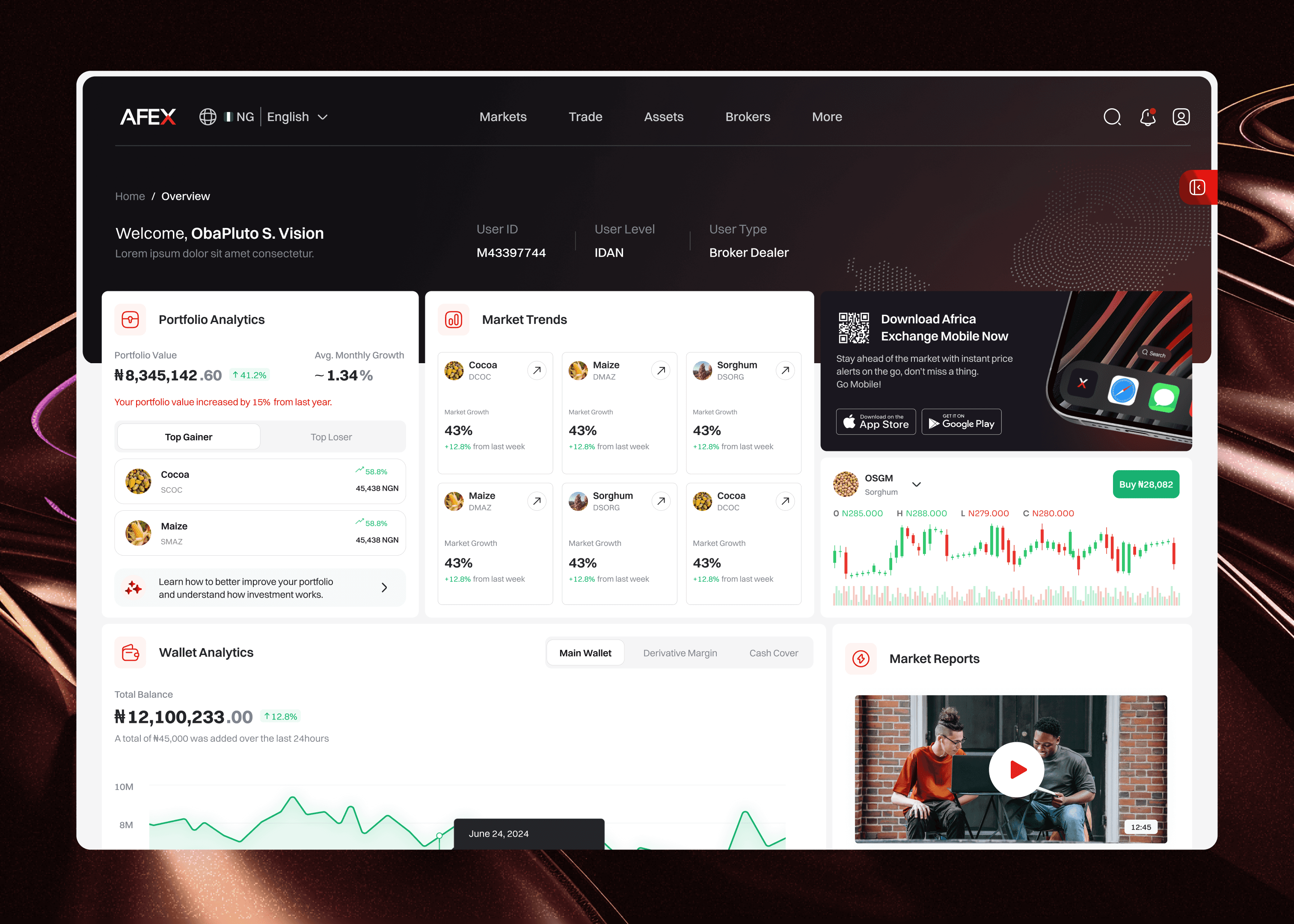
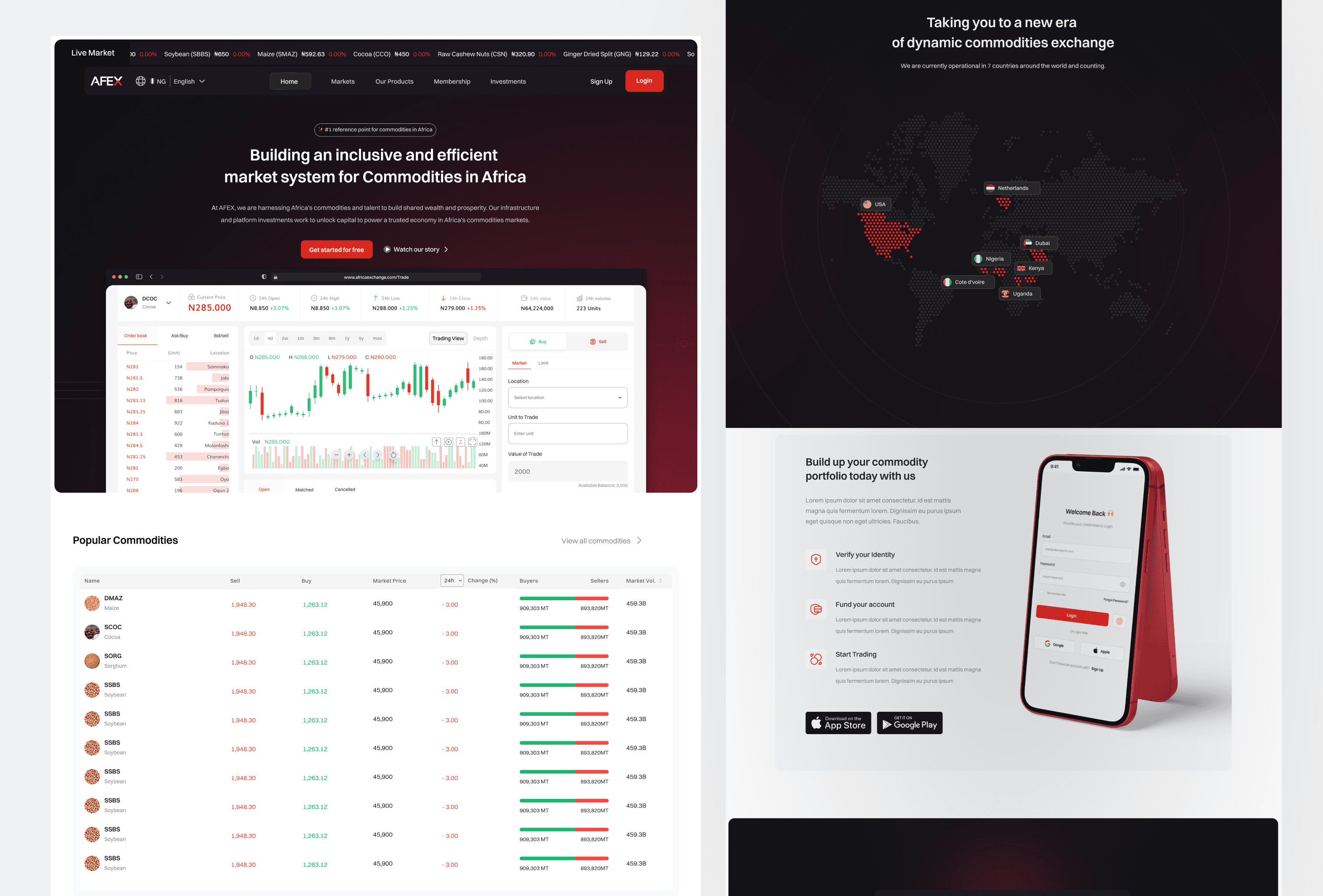
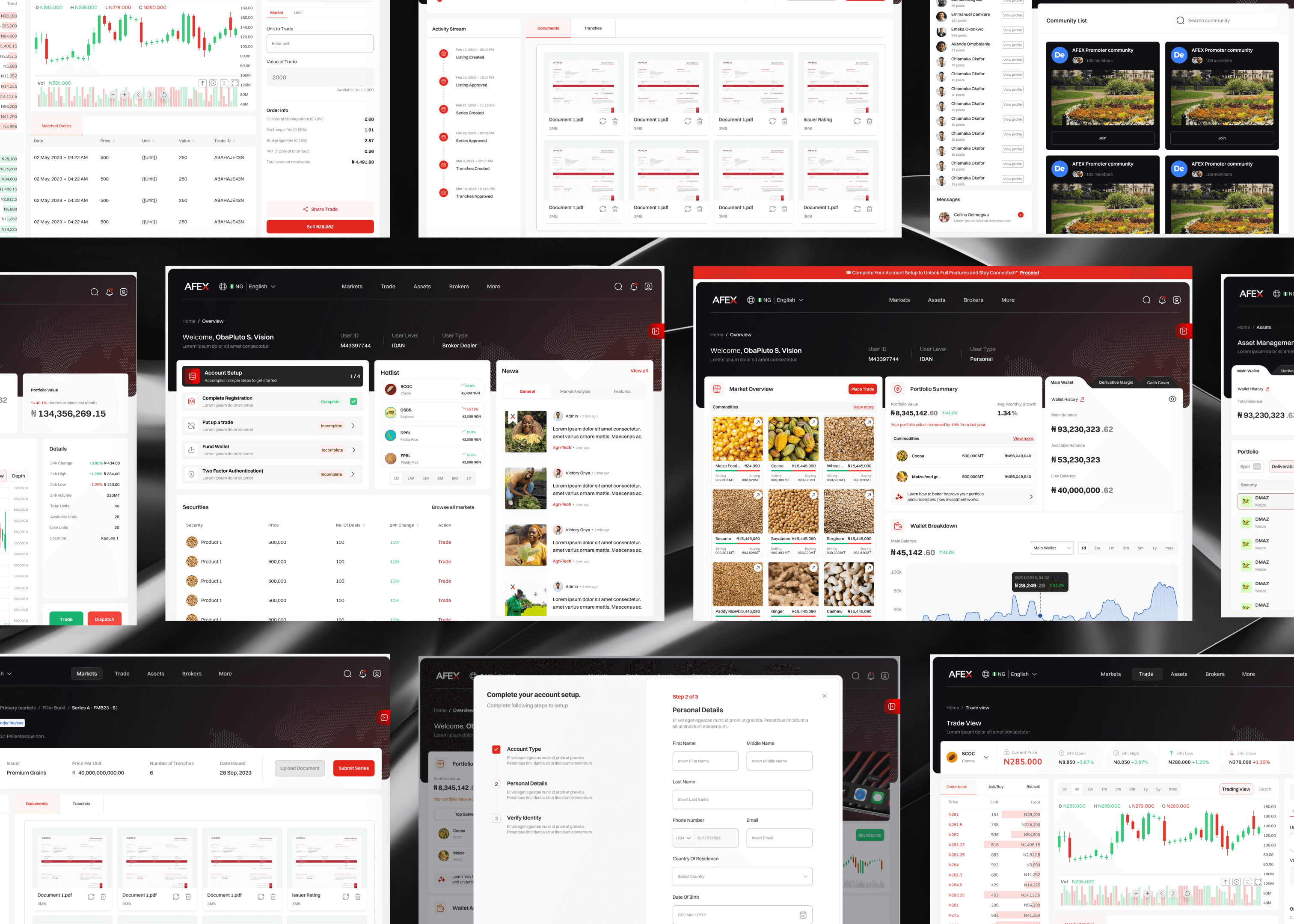
The design of the Africa Exchange platform was influenced by AFEX’s mission to create a transparent, data-driven agricultural market, resulting in a mobile-first, low-bandwidth solution that prioritized real-time pricing, trust-building, financial integration, and user education—ensuring accessibility and usability for farmers, traders, and institutional investors across Africa.
With a mobile app available on all mobile stores and a Web App with mobile compatibility considerations also.
Outcome
Following the design and development of the Africa Exchange platform, AFEX successfully increased market transparency and accessibility across multiple African countries, enabling over 100,000 smallholder farmers to connect with institutional buyers, reducing post-harvest losses by up to 30%, and facilitating trade volumes exceeding $500 million within the first few years of operation.