July 6, 2025
Year
2025
Client
Samuel (Fictional Project)
Category
Flight Tracking
Product Duration
3 - 4 Weeks
Challenges
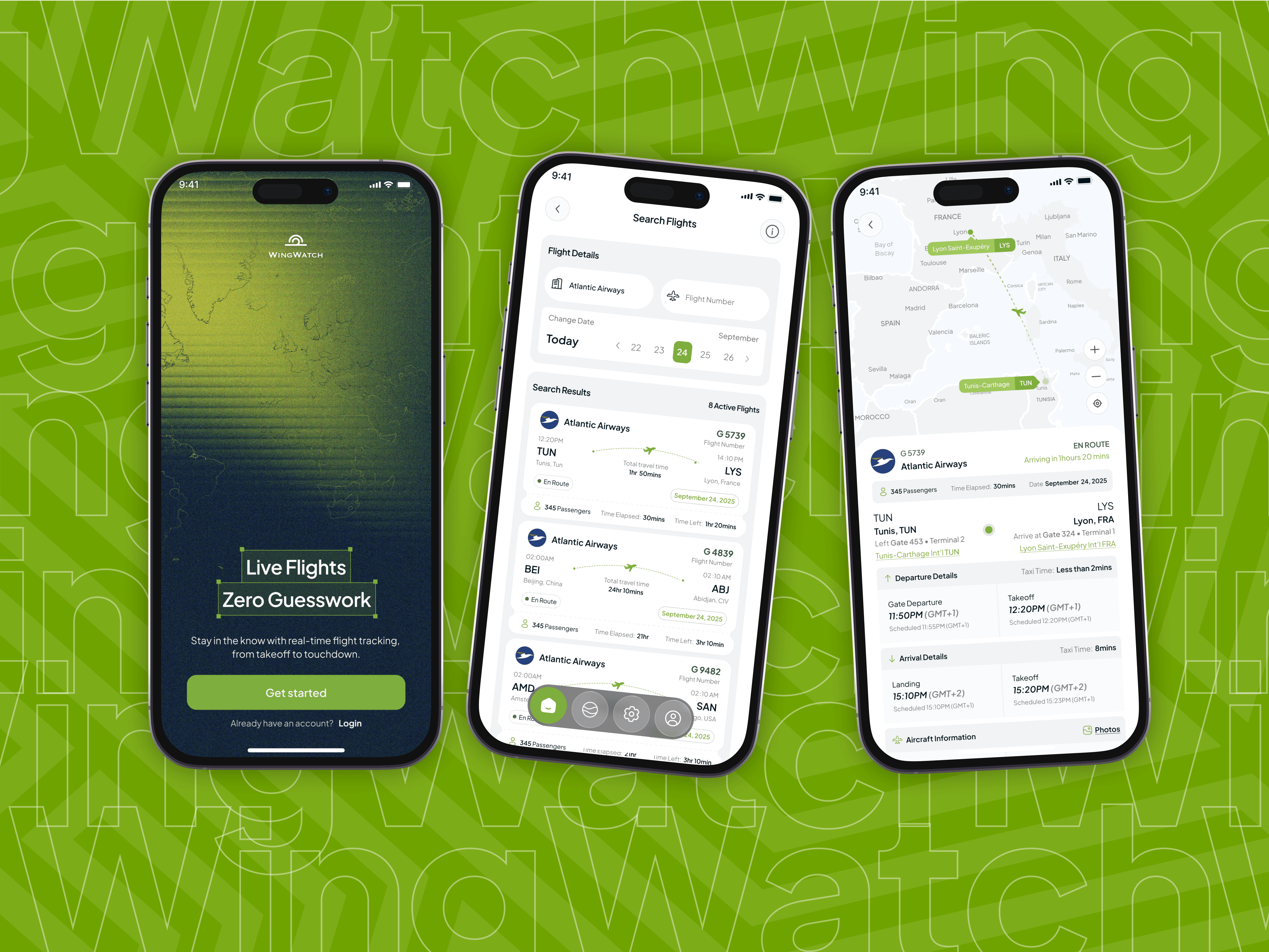
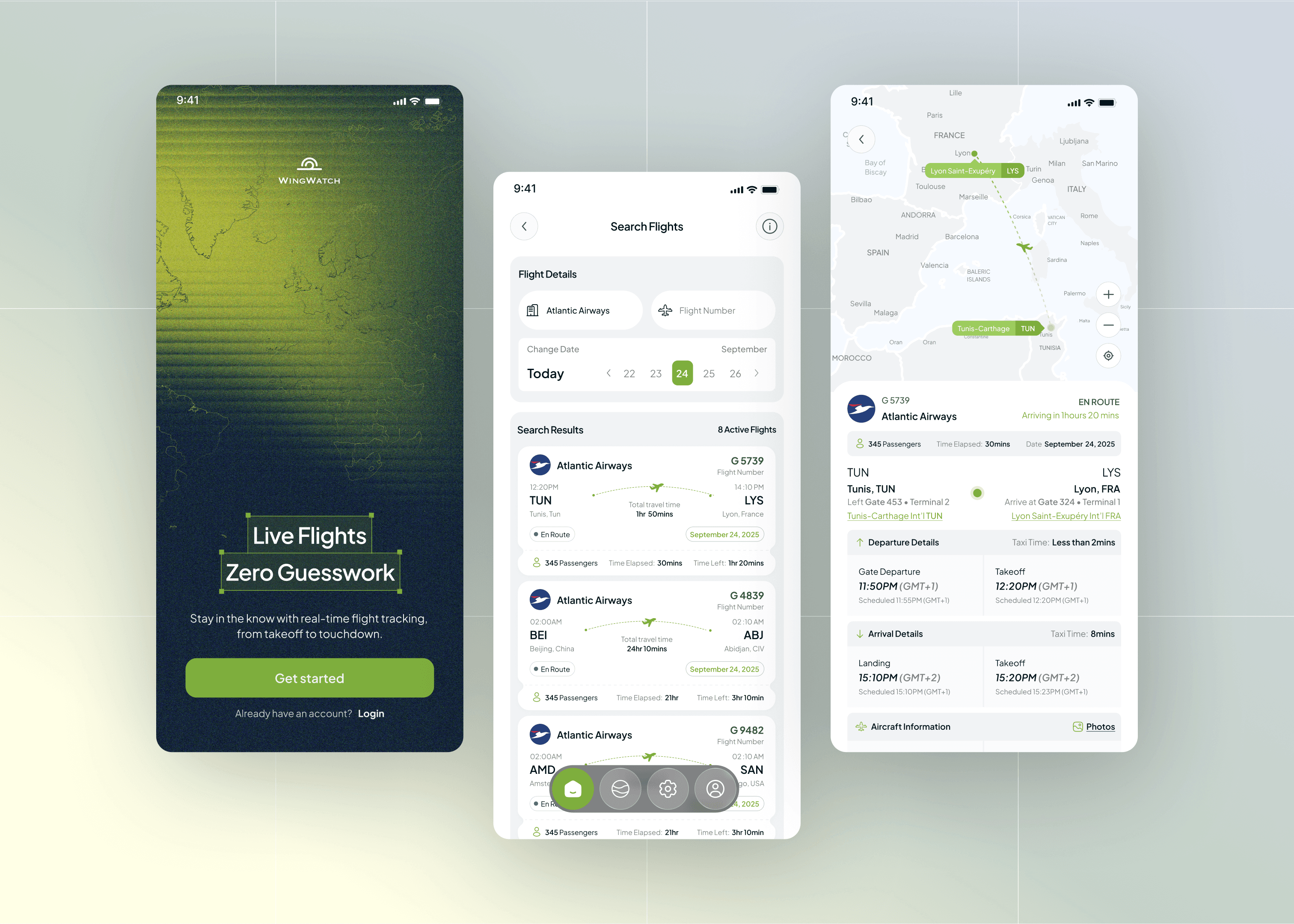
The main design challenge for WingWatch was ensuring real-time accuracy and making flight tracking easy to understand for users of all backgrounds, from frequent travelers to occasional fliers. Users needed to access flight status in an intuitive, streamlined way, without being bogged down by overwhelming information or confusing layouts.
Research
To inform the design of WingWatch, I employed a mixed-methods approach that combined behavioral analytics from existing flight tracking apps with targeted contextual inquiries during users’ travel experiences. This allowed me to uncover not just what users needed, but how they interacted with flight information in real-time, revealing pain points around information overload and notification fatigue. Insights from these observations directly influenced prioritizing concise data presentation and smart notification settings in the final design.
Design
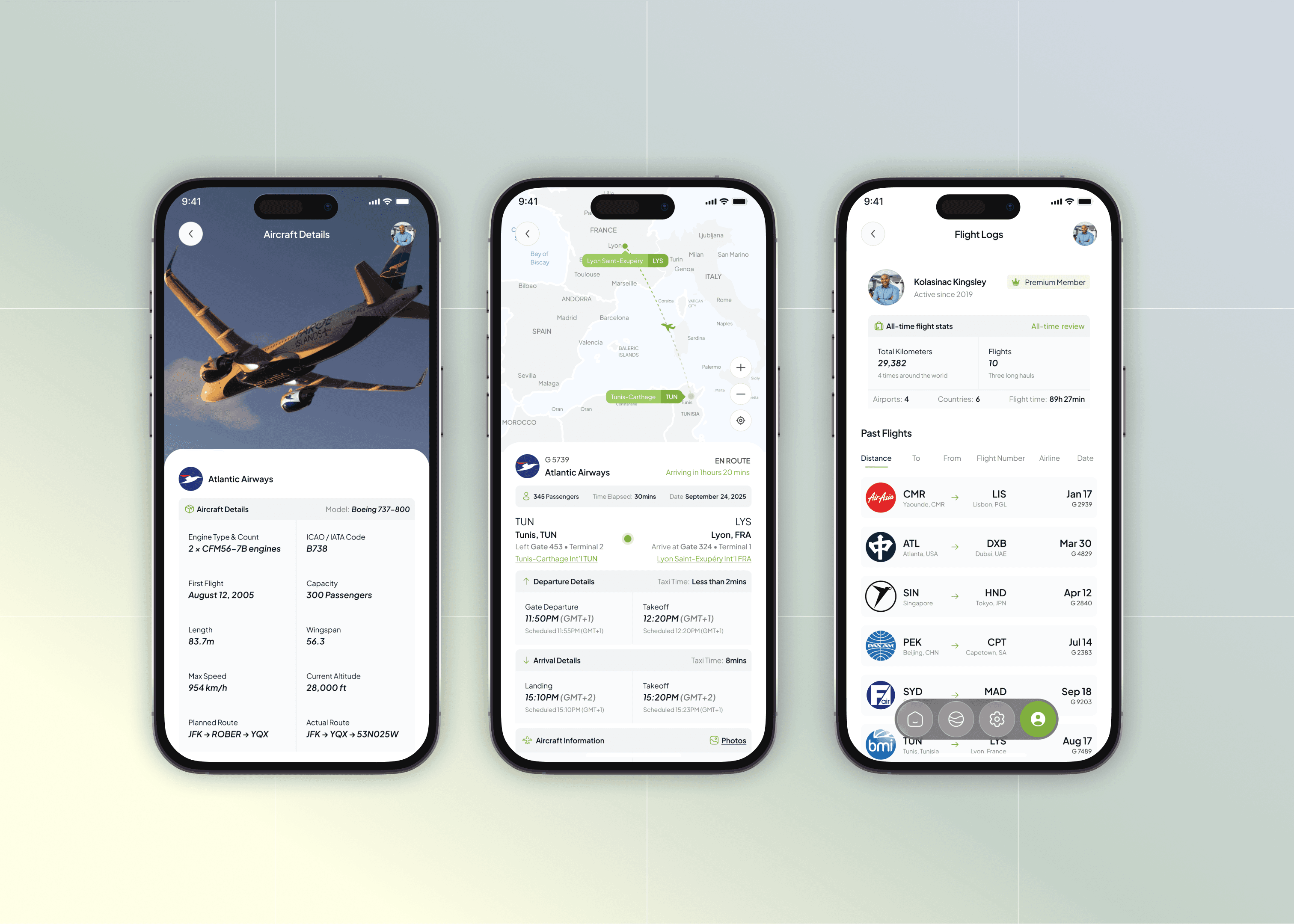
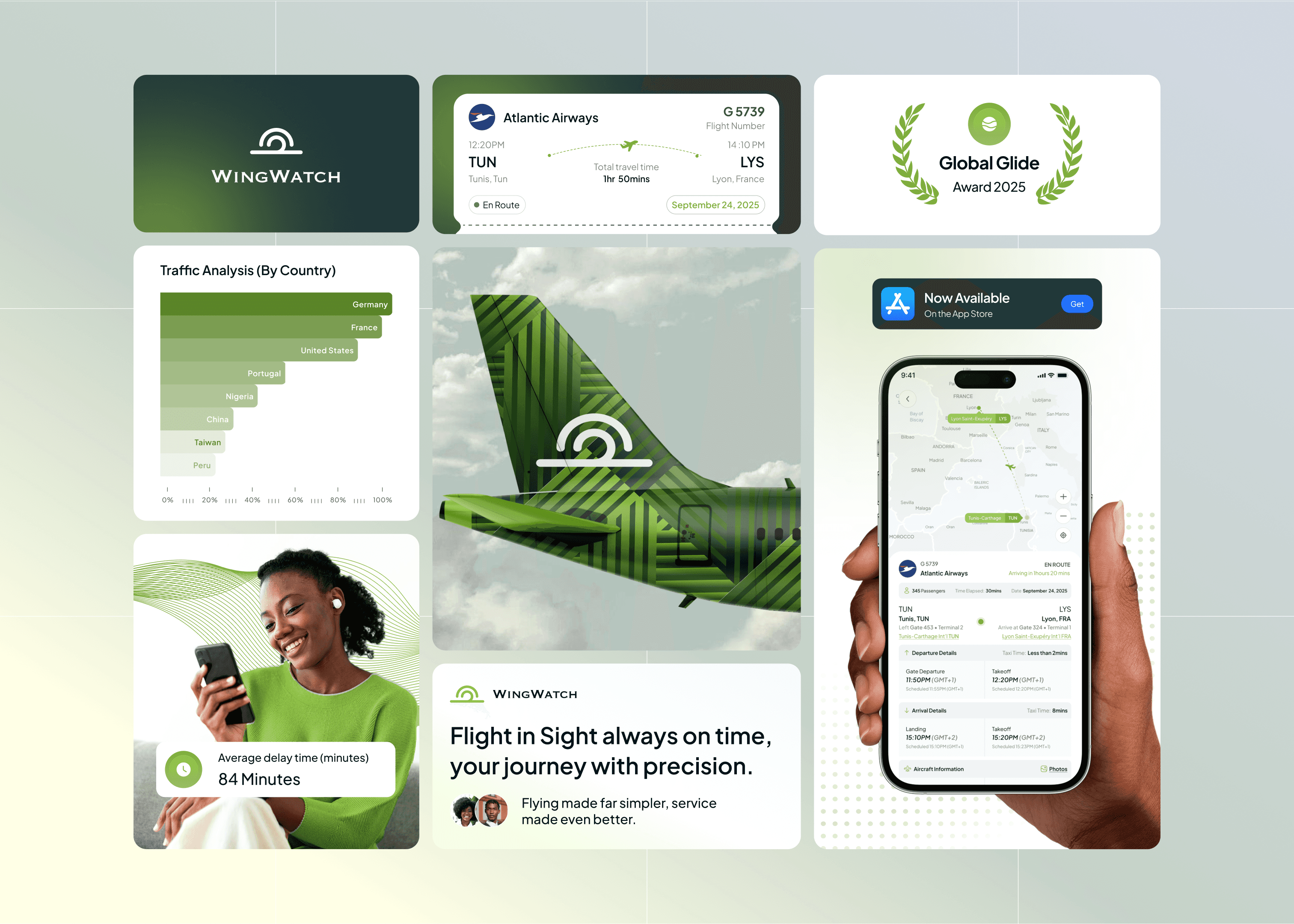
Knowing that travelers are often on the go, I emphasized fast loading times, clear notifications, and an easy-to-navigate interface. I conducted user testing to ensure the app was intuitive, especially for those with limited tech experience. Key features like flight search, push notifications, and flight status cards were designed to be accessible with a single tap. Additionally, I ensured the app was scalable to accommodate global flight data and easily accessible for users in different time zones, considering the dynamic nature of air travel.
Outcome
While WingWatch has not yet launched publicly, I’m actively developing a testable version to gather real user feedback and validate key features. Early internal testing indicates the design effectively addresses common pain points like information overload and delayed updates, and the goal is to refine the app further based on user insights to ensure a smooth, reliable flight tracking experience at launch.